Showing posts with label book review. Show all posts

December 13, 2013

Book Review: Lit: A Christian Guide to Reading Books by Tony Reinke

Front Cover - Lit
Title: Lit: A Christian Guide to Reading Books
Author: Tony Reinke
Publisher: Crossway Books
Genre: Christian non-Fiction


Why read?

"Employ your time in improving yourself by other mens writings, so that you shall gain easily what others have labored hard for." -Socrates

The written word should be used to improve our instruction, understanding, and knowledge (Romans 5:4). Of course these writings must be placed under the microscope of truth provided to us by the Bible (Psalm 119:105) which helps us discern the infallible from the falsehoods (I John 4:1). Reading is one of our callings as Christians.

A book that is about reading. Lit explores reasons for reading in detail. It raises questions to help understand reading habits and to refine these habits; to analyze what is important and what is a waste of time. Reading is an example to our children.

Lit caused me to take a step back and examine how and what I read. It reads well and the ideas are inspiring and clear. This is an encouraging book that I do recommend. Everyone should read more.


November 7, 2013

Book Review: The Chase by Clive Cussler

 
Title: The Chase
Author: Clive Cussler
Publisher: Berkley
Genre: Fiction, Action and Adventure

Unfortunately this book is a disaster. There are a few good points: the intro is gripping and the storyline is ok and…that is it. The dialogue is weak and ridiculous and the characters are cardboard. The editing is horrendous (like this blog) and the timeline doesn't flow. At one point a minor character has a different name then he did several pages before. Coincidentally one of the characters, moments before an historical event, declares the time, place, and date. The good guy says things like, ‘I will catch him if it’s the last thing I do.’ And the bad guy says things like, ‘They will never catch me, I am too smart and sly for the law’ and 'say goodbye' just before shooting people. It is corny and cheap. The characters remind me of Ayn Rand characters in their lack of depth. All the girls immediately fall madly in love with the 6 foot something blonde hair, blue eyed, dreamy good guy. And the bad guy is heartless with cold eyes and a greedy soul. Save yourself some time, get another book.

 The Chase (An Isaac Bell Adventure)

July 5, 2013

The Price of Politics by Bob Woodward

Book Review: The Price of Politics

Author: Bob Woodward

At the end of July 2011, days before the United States defaulted on its debt limit, negotiations to pass the annual budget were at a stalemate. "We can't yield," exclaimed Biden.  "This is bullsh*t! We're not bending," cried Obama appointee Jack Lew. Reflecting, Obama said, "It was as intense a period as I've had." "Trying to put Humpty Dumpty back together again would be almost impossible," Boehner (pronounced Bay-ner) warned.

The Price of Politics timelines the steps that the government took to fix the down economy during Obama's first term. A large portion of the book covers the intense budget compromising and negotiating that took place in the summer of 2011. Obama and Boehner were the prolific figures in these negotiations. During the tense budget talks, members of the Republican Congress fought for spending cuts while the Democratic Senate fought for tax increase.

The book gives great insight into the internal workings of the United States Federal Government. And, without stating it outright, it brings to light problems that arise when a third party is thrown into a system that was designed to work as a two party system. The book reads fast and flows well. Woodward has a lot of experience with the politicians and seems to be able to get interesting and raw information from them. I would recommend this book to anybody who is interested in US politics.  

February 5, 2013

Book Review: The Puritan Dilemma - The Story of John Winthrop

Author: Edmund S. Morgan
Genre: US, English, and Religious History

John Winthrop was a Puritan.  A Puritan was a Calvinist.  A Calvinist is someone who sees God's hand in everything.  A Puritan did not call himself a Puritan.  A Puritan called himself a godly man striving to please the Lord in all aspects of life.  The Puritans of the early colonial Massachusetts Bay Colony segregated into two contemporary Christian denominations: the Presbyterians and the Congregationalists.

In 1629, John Winthrop found himself elected as the governor of the Massachusetts Bay Colony on an expedition to the largely desolate New World.  Four ships landed near the Charles River in present day New England in April 1630.  Until his death in 1949, Winthrop served 12 annual terms as governor, and played a vital role in strengthening and building the New England colonies.  He proved himself a competent, intelligent, and persuasive leader who created peace among men with tendencies to disagree.  He paved the road to the representative form of democracy that the United States experiences today.

I highly recommend this book.  Subectively written, the author does an excellent job of understanding the mind of a Puritan and explaining their actions and decisions. The writing flows well and involves the reader. I found myself with an open map next to me looking up towns as I read.

January 31, 2013

Book Review: Failure of a Mission

Neville Henderson shaking hands with Joseph Goebbels

Title: Failure Of A Mission: Berlin, 1937-1939
Author: Sir Neville Henderson
Genre: World War II History

From the final chapter of the book, Sir Neville Henderson states: "In the early hours of September 1st without any declaration of war the German Army crossed the frontier, and the German Air Force proceeded to bomb the Polish airdromes and lines of communication...The German Representative in London was informed in due course at that hour that a state of war existed between Britain and Germany."

Henderson was England's Ambassador to Germany for the two years leading up to the war.  Tirelessly he worked to divert the aggression that Germany showed towards its neighbors.  He met often with Herr Hitler, Heinrich Himmler, Joseph Goebbels, Hermann Goering and many other men of influence in the Third Reich.  Henderson respected the Germans, but hated their game. On most occasions, the Englishman was graciously treated, but the context of his meetings seemed to most often be smoke and mirrors. From the beginning, Hitler's intention was war.  There was nothing Neville Henderson could have done to stop the Nazi war machine.

The book on the whole is a bit dull.  The descriptions of the demeanor and personalities of the notorious German leaders is interesting.  It is a small look into Germany leading up to the war.  I would not recommend this book to anyone unless they are interested in Nazi, German, European, or World War II history.


January 18, 2013

Book Review: Pol Pot Anatomy of a Nightmare

Book: Pol Pot: Anatomy of a Nightmare
Author: Philip Short
Genre: non-fiction, World History, Cambodian History

Pol Pot was responsible for the death of approximately two million people during the Kmher Rouge rule from 1975 to 1978. In these three years, the agrarian communists annihilated 25% of the Cambodian population. Pol Pot and the Kmher Rouge leadership eliminated cities, money, emotions, cooking, family, private property, smiling, and any type of individualism. Smiling? How can you eliminate smiling?  It can be eliminated by killing anybody who smiles.  Everyone was to be an extension of the state.  The state was a body.  The body worked to grow in power. When someone worked against this body, they were disposed of much like a weed in a garden is pulled up and tossed into the trash.


From his birth in 1925, to his death in 1998, the biography, Pol Pot: Anatomy of a Nightmare follows the unlikely and incompetent Pol Pot. His life is detailed as he ages from failing student to revolutionary uprising to Cambodian communist leader to dying jungle outlaw.  He is remembered in history primarily for the killing fields and the torture camps and the genocide-like massive destruction imposed on Cambodia.  This book digs much deeper into the politics of the times, the connections between the Kmher Rouge, the Chinese, and the Vietnamese, and the philosophy of the communists.


The book was long and dragged on with inscrutable detail. The number of players in the book was endless and the foreign names created an easy route into confusion.  The book contains an index of names with description, which helped, but slowed the reading down even more. Unless one is very interested in southeast Asian history, I would not recommend this book, but instead recommend this blog post which offers a shorter, but thorough glimpse into Pol Pot and the Kmher Rouge.  An excellent book that is more specific to the suffering under Pol Pot that I recommend is: To Destroy You Is No Loss: The Odyssey of a Cambodian Family.


December 10, 2012

Book Review: The Hobbit

Title: The Hobbit or There and Back Again
Author: J.R.R. Tolkien
Genre: Fiction, Fantasy, Adventure

The Hobbit has captivated readers since 1937.  For generations it has fed imagination.  On December 14, those images will be presented on the big screen.  Enchanted lands, goblins, magical rivers, elves, lonely mountains, trolls, a dragon and much more...how will this idea in our minds compare to the image put onto the screen?  Will it ruin or reconfirm our imaginations?

Bilbo, a sedentary homebody, is dragged into an epic story of life and death proportions.  He is forcefully volunteered to accompany 13 dwarfs on an unexpected journey to reclaim the Misty Mountains where Smaug, an evil dragon sits atop an amassed treasure.

Personal growth, destruction, life, death, happy, sad, joy, fear, anger, selflessness, selfishness, greed, and generosity, the story of contradictions is the story of life.

Movie Trailer - The Hobbit


The Hobbit Official Trailer #1:


The Hobbit Official Trailer #2:

The Hobbit Official Trailer #3:


October 10, 2012

Book Review: Blind Man's Bluff

Title: Blind Man's Bluff: The Untold Story of American Submarine Espionage
Author: Sherry Sontag, Christopher Drew
Publisher: William Morrow Paperbacks (October, 2000)
Genre: US History, Cold War, political thriller


From 1945 to 1991, the worlds super powers locked horns in a slow motion struggle for information.  The USSR and the USA did not trust each other and it became clear that an effective means to "watch" each other was waged via submerged sea faring vessel.  The era of the submarine began evolving at a furious rate to the point that a nuclear sub can remain underwater indefinitely, creating its own oxygen and water, food being the only limitation.

Blind Man's Bluff is a collection of stories, untold until the 21st century, of various missions made by the submariners during the Cold War.  From wiretaps into land lines made in Russian waters to men overboard, the stories are interesting, thrilling, and educational.

From a former Navy submariner, I have heard it argued that a lot of this book is compiled of exaggerations and even a little untruth.  These same former Navy also stated their displeasure with the book for its liberal manner in sharing tactics and strategy that are still in use today.


April 29, 2012

Book Review: The Fountainhead

Title: The Fountainhead
Author: Ayn Rand
Publisher:  Plume; CENTENNIAL EDITION edition (November 1, 1994)
Genre: Philosophical fiction

The Fountainhead (Cliffs Notes)

Front Cover: The Fountainhead
 The Fountainhead is the philosophy of Objectivism argued in the form of a fiction novel. It is the doctrine that reality exists separate from consciousness. Reality is that which we can sense. We can sense our creation of an object, but we cannot sense the idea of creation. It is not real until it is created and when created, it is. The philosophy is a strong proponent of capitalism, private property and minimal outward influence from regulations and rules. Man can only truly live life through the means of action and the fruition of his interests and skills.  Selfishness is the noblest of virtues and altruism is slavery.

The Story: A great architect of genius  is unwelcome in his school, his profession, and in society.  The newspapers and men of influence despise and ridicule him.  Despite the movement by the majority to subvert the world to mediocrity by destroying this man and his progressive style, he creates for the sake of knowing that he created.  Money, fame, the desire to be accepted mean nothing to him.  He lives to create his ideas.  Some recognize the greatness of the structures designed and buck the outrage of the influential and powerful mediocrity.  Without verbal argument, the great architect continues to build and allow his work to speak.  Some make it their prime goal to destroy this man and his ideals.

If man is free to do as he pleases, there are many men who lose control of their power.  "They (rulers of men) exist entirely through the persons of others. Their goal is in their subjects, in the activity of enslaving. They are as dependent as the beggar, the social worker and the bandit. The form of dependence does not matter."  Strong regulations and powerful governments create little progress and few things that propel the world forward.

Ayn Rand and objectivism have truth in some areas, but are gravely lacking in others.     Humans are reputable for their inequalities.  Many cannot stand on their own merits.  Do we leave them to suffer?  There is very little hope in man.  Where did man receive the ability to reason and create?  Where is God?  If, as objectivisim states, man is god, we are all doomed.

Some have compared the fictional architect in this book to the real life Frank Lloyd Wright.

Other Ayn Rand Book Reviews:  Atlas Shrugged

April 20, 2012

Hunger Games


Title: The Hunger Games
Author: Suzanne Collins
Publisher: Scholastic Press
Genre: Young Adult Novel

The Appalachian Mountains have been home to a free spirited people; a people defying the societies that have attempted to govern them.  The trappers, the pioneers, the bootleggers, the rebels, hillbillies, mountain men, and bluegrass have all called her home.  It is only appropriate that the under estimated heroine of this popular novel lives her young life as a huntress hidden among the green slopes of the dense Blue Ridge Mountains.

At some point in the future and after several unspecified world disasters, twelve districts are ruled by  the Capitol at District One set in the Rocky Mountains.  As an annual authoritative reminder a game is conducted.  The districts each unwillingly provide tribute of one girl and one boy between the age of 12 and 18 to the Capital as a participant in the ‘Hunger Games.’  The children are released into a climate controlled arena.  A winner is declared when only one still lives.  This is the story of one particular game.

Short, fast, simple, entertaining.  The book reads quick.  A collection of many different themes, the story could be symbolic of an array of ideas, eras, governments, or even an opinion of what is yet to be.

February 20, 2012

Book Review: 1421 The Year China Discovered America

Title: 1421 The Year China Discovered America
Author: Gavin Menzies
Publisher: Harper Perennial
Genre: World History

Chinese Junk compared to the Santa Maria
After 30 long years of war, Chinese forces succeeded in ousting the Mongol Empire in 1387 leading into the Ming Dynasty.  The early Ming Dynasty was a period of growth, expansion, and prosperity. Coupled with the Chinese knowledge of navigation, astronomy, shipbuilding, and written language, the Chinese built the greatest, wealthiest, most advanced Kingdom on earth. With this wealth and abundance came the ability to build and support a exploratory seafaring fleet.

The ships were built of teak.  In order to provide the wood, teak forests were decimated for hundreds of miles in each direction from Beijing. There were nearly 2,000 ships in all. The greatest of these ships could hold 3 months worth of food and travel 4,500 miles without stopping. The larger ships were built with compartments in the bowels. These compartments could be filled with water where trained dolphins provided the men with fresh fish. With a rich, peaceful, powerful Kingdom supporting it, this fleet divided into four expeditions, setting sail in early 1421.

These four fleets set out for four different parts of the world.  Captain Hong Bao, set sail for and explored the continent of Africa and the Atlantic side of South America, sailing thru what is now known as the Strait of Magellan. Captain Zhou Man explored Australia and the Pacific side of North and South America. Captain Zhou Wen explored the North Pole, Greenland, and the Atlantic coast of North America. And Captain Yang Qing traveled India, the Indian Ocean side of Africa, and the Middle East. During their epic expedition, China fell into a destructive civil war.

In May of 1421, disaster struck in the form of lightening.  Much of Beijing burned.  Believing it was divine disapproval of imperialist expansion and decimation of the forests, China's Ruler Zhu Di took his own life. Following was a dark and war ridden period of struggle. The explorers and their fleets returned to a land that was unrecognizable to them. Their voyage was not celebrated and documented.

The thesis of this book seems far stretched. Gavin cites a lot of evidence: Chinese DNA among Native Americans and Africans, Asiatic animals and fauna spread across the continents, unidentified wreckage strewn across the globe, mysterious rock memorials along coasts of each great land mass, and even documentation of European explorers. However, all evidence cited is not always evidence proven. There is a lot of dissent directed at the evidence provided. The possibility of such an undertaking is not impossible.

January 8, 2012

Book Review: Convenant and Election

Title: Covenant and Election in the Reformed Tradition
Author: David Englesma
Publisher: Reformed Free Publishing Association
Genre: Religious


Among other things, it appears that this book is written in response to an issue that is rearing itself within the modern church world. "The federal vision is the avowed development of the covenant doctrine that teaches that the covenant is graciously made by God in Christ with all the physical offspring of believers alike, but is dependent for its continuance with a child and for its fulfillment in the salvation of a child upon the works of the child." (page 2)

Covenant and election are doctrines that have their roots in the Bible. The covenant being the promise that God has made with his elect. And election being God's actions of having "chosen us in him [our Lord Jesus Christ] before the foundation of the world, that we should be holy and without blame before him." (Ephesians 1:4) This unconditional covenant is governed by election. These truths are defined and upheld in the Baptism Form of the Dutch Reformed churches and the Canons of Dordt; both of which are upheld by Scripture.

Many theologians have distorted the scriptural teachings of covenant and election. This book wades thru the teachings of others and picks apart their errors. It also defends the stance of John Calvin.

For the importance and depth of the doctrine discussed, the book is a surprisingly easy and quick read. It gives the reader a sharp understanding of God's promise to His elect and uses Scripture and the teachings of wise and godly men. In this book Englesma justly criticizes erroneous stances, but it seems, in at least one case, that the criticized beliefs are not properly defined making the denunciation easier to point out.

July 17, 2011

Leviathan Book I: Of Man

Title: Leviathan
Author: Thomas Hobbes
Publisher: Public Domain Books
Genre: Philosophy

Our knowledge and experiences in this world originate from our senses.  External bodies colliding with our senses creates images, tastes, smells, pressures, sounds, etc.   The residual effect is our decaying sense or imagination.  Understanding and thought is the succession of one imagination in line with another line of imagination.  Speech is the transformation of mental discourse into verbal discourse.  Reason is inviting our experiences into our thought processes.

To reason is to be subject to our senses.  True individual reason cannot exist.  Senses and thought processes are different by each individual beholding.  True certainty based on individual reason cannot exist.  There must be an agreed upon definition of each word in order for reason to become somewhat homogeneous.  Science is putting lines of reason together and cannot be possible without well defined words.

The arrangement of the book is a philosophical stepping stone.  The first part leads into the second and the second bases its arguments and conclusions on the ideas of the first part and so on.  However, after science, appetites (good) and aversions (bad) are the motions that take place within us that create endeavor or action.  Some are born with us others are gained from experience.  Proceeding our actions is deliberation and our so called will.  Passion and fear are rooted in appetites and aversions.  To have no passion is to be dead; to have weak passion is to be dull; to have passions indifferent is to be irresolute; to have passions abound is to be mad. The same can be said for fear.  From our passions and fears arises the pursuit of  our desires and the avoidance of our fears.  Pursuit and avoidance are actions that will inevitably lead to conflict; placing men against each other.  In this system there is no liberty.  Contracts must be created in order to allow some sort of liberty without fear.

Hobbes believes to be able to have a philosophical method, the human nature must be understood.  His reasoning, deduced from sensual experiences, I am sure, is the reason the first part of his argument is dedicated to defining human nature and the human thought process. The second part, Of the Common-Wealth, will be a show of protecting man from himself.

May 28, 2011

The Fall of Japan


Title: The Fall of Japan
Author: William Craig
Publisher:  Galahad Books (1997)
Pages:  368
Genre: Historical non-fiction


"The enemy has begun to employ a new and most cruel bomb, the power of which to do damage is indeed incalculable, taking the toll of many innocent lives. Should we continue to fight, it would not only result in an ultimate collapse and obliteration of the Japanese nation, but would also lead to the total extinction of human civilization.  Such being the case, how are we to save the millions of our subjects, or to atone ourselves before the hallowed spirits of our Imperial Ancestors?  This is the reason why we have ordered the acceptance of the provisions of the Joint Declaration of the Powers." - ignoring Imperial protocol Emperor Hirohito in his first ever public address to the nation of Japan on August 15, 1945, four days after the surrender of Japan and six days after the unleashing of the 2nd atomic bomb that devastated Nagasaki.

The fall of Japan was a dramatic time in an august nation.  Young and zealous men of military indoctrination continued the fight despite the words of their Emperor.  Coupes to overthrow the surrender rose and fell overnight.  Those in favor of surrender were stalked and murdered in their sleep.  To many, surrender was the denial of the sanctity of their Emperor and their nation.  Disembowelment, assisted suicides, self inflicted shootings, murders, terrorized this people.  The nightly bombing of Tokyo killed thousands.  The atomic bombs killed tens of thousands and thousands more in the following days and months.

The book was very interesting and includes perspectives from a wide spectrum both Allied and Imperial.  It is evident that a lot of time was spent in the research of this book.  From survivors of the Fat Man in Nagasaki to Gen Wainwright (an amazing story) POW in the Philippines, the perspective changes from personal to capacious giving a very unique insight into the events.  Highly recommended for anybody interested in 20th century history, Japanese culture, philosophy or military history

March 16, 2011

Guns, Germs, and Steel

Title: Guns, Germs, and Steel: The Fates of Human Societies
Author: Jared Diamond
Publisher:  W.W. Norton and Company
Pages:  494
Genre: Social Science, Human Geography

The Fertile Crescent is the native home to the donkey, the cow, pig, goat, sheep and dog.    It is a native home to 32 types of large-seeded wheat species.  It is also the native home to peas, lentils and chickpea which are pulses high in protein.  Flax, also original to the area, is high in fiber.  This variety of homegrown, provided for a balanced diet of the early man.  The Fertile Crescent is the birthplace of modernity.  Australia is native to no domestic animals.  Australia was home to no crops.  All their nutrients came from the hunting of wild animals and the harvesting of wild vegetation.  For various reasons, the animals were not able to be domesticated and the vegetation was not able to be farmed.  Australian natives were hunting with spears as recently as the 20th century.

Each area of the world has its own climate, native plants, animals, and unique geographic features.  The foundation of each culture springs from the circumstances offered that specific group based on geographic location.  If there are no animals easily domesticated nor harvest-able crops in a particular area, those living there will not grow and prosper as those living in the Fertile Crescent.  With animals and edible vegetation come farms and with farms come large groups of people living in small areas and with this comes government, competition and disease.  Each society is equal other than geographic location.

This book appears to have been written in reverse.  The author has his politically correct conclusion selected and must be particular in supporting the resolution with historical examples, facts and theories.  He neither has anything negative nor positive to say about any particular culture or society.  This gives the appearance of an unbiased author.  The book is powerful with interesting examples.  It offers some education with a broad and brief, although theorized history of the world.

January 19, 2011

The Jungle


Title: The Jungle
Author: Upton Sinclair
Publisher: Barnes and Noble Classics
Pages: 396
Genre: Political Fiction/Classic

The purpose of this book was to expose, in the words of Upton Sinclair, "the inferno of exploitation of the typical American factory worker at the turn of the 20th Century."  Undoubtedly, the book did have an effect on the meatpacking industry, but not in the manner Sinclair wanted.  Theodore Roosevelt was president at the time.  His view of Sinclair:  "I have an utter contempt for him. He is hysterical, unbalanced, and untruthful. Three-fourths of the things he said were absolute falsehoods. For some of the remainder there was only a basis of truth."  Despite this, Roosevelt sent two men into the meatpacking factories to find that the conditions were absolutely revolting, unsanitary and unbearable.  As a result,  the Meat Inspection Act and the Pure Food and Drug Act of 1906 were passed.

The jungle begins with a family of eager and excited Lithuanian immigrants who arrive in Chicago in the pursuit of life, liberty and happiness in the early 1900's.  Despite the many unemployed in the area at the time, the able bodied find work at Packing-town, a large slaughterhouse and meatpacking factory.  The family spends their savings on a down payment for a home.  They soon come to find that they were swindled in the purchase of the home.  From this point on, the family struggles with wage slavery, horrid working conditions, starvation, freezing cold, injuries and even death.  Family members run away; jobs are lost; morality loses its prestige becoming a jungle of individuals fighting for survival.

Real life is a continuous struggle.  Some struggle more than others.  The story of struggle in this book is not to be easily forgotten, but if pondered may be revealed to be an exaggeration.  First, the book, as stated by the author was created to promote an ideal.  That reveals a bias.  Second, when someone speaks in extremes, they reveal themselves to exaggerate.  This book is nothing but extremes.  There are few if any moderate characters (rich or poor, strong or weak), no moderate plot, no moderate settings and no moderate thoughts.  A portion of this book is not storyline, but instead a sort of socialist manifesto.  The manifesto states, "but imagine the problem of providing the food supply of our nation once taken in hand systematically and rationally, by scientists!"  It also predicts that if controlled by scientists, "the exact requirements of the community known," and "the exactly needful number to each place."  Be weary of statements that offer promises on something this impossible to fulfill.  Small communities cannot master this idea without disturbances and it remains only impossible to be used on a grander scale.

December 20, 2010

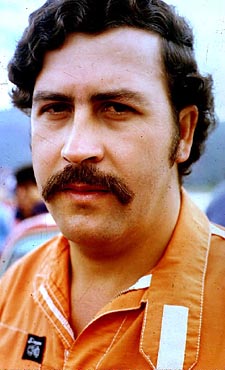
Killing Pablo

Title: Killing Pablo
Author: Mark Bowden
Publisher: Peguin Books
Pages: 285
Genre: Non-fiction

Pablo Escobar, referred to as the World's Greatest Outlaw, arguably was the richest, most successful drug lord to have ever lived.  His career began in the early to mid 70's while Pablo was in his 20's.  By 1976, Escobar was the unofficial king running drugs from the jungles in the hills around his hometown of Medellin.  Rising to power through merciless killings, Pablo tried to portray himself as the south American Robin Hood.  With the support of the local police and populace, he rose to an unimaginable rank of power.  In 1989, Forbes magazine declared Pablo to be the 7th richest man in the world.

By the late 80's Pablo had become a sort of drug war symbol.  The US offered to Colombia manpower and state of the art assistance in tracking and eliminating the man.  The majority of the book follows the CIA and the Colombian federal government in their 16 month manhunt for the drug lord.  The search took many twists and turns as they tracked the man through mountainous jungle terrain and neighborhoods of sometimes violent Escobar sympathizers.  In Medellin, to many, Pablo was the law.  They were a region within a country, but with little loyalty to that country.

Basic law enforcement was very weak in the mountainous jungle region of Medellin  It was a forgotten region of Colombia populated by mostly poor natives.  The law that takes precedence is the law that it is enforced. It is possibly reminiscent of the US southwest in the 1880's and 90's.  Pablo was able to enforce his version of  law in Medellin and become its unofficial dictator and self entitled protector.  Cocaine grew in abundance in the region.  The cocaine being exported to meet the increasing demand in the US brought billions to the region.  The combination of Pablo's position as kingpin and the high demand of coca propelled Pablo to the title of World's Greatest Outlaw and drug war symbol.

November 6, 2010

Book Review: Relentless Pursuit

Title:  Relentless Pursuit: The DSS and the Manhunt for the Al-Queda Terrorists
Author: Samuel M. Katz
Publisher: Tom Doherty Associates, LLC
Pages: 297
Genre: Intelligence Non-Fiction
Related Books: Jawbreaker by Gary Berntsen

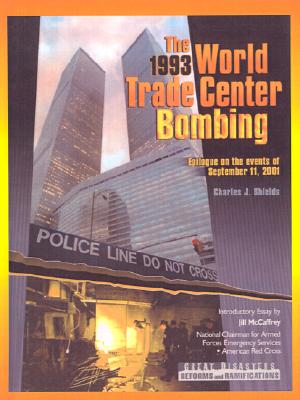
On February 26, 1993, an Econoline Van filled with 1,500 pounds of homemade fertilizer based explosive urea nitrate was parked in the basement of the World Trade Center Tower One.  Strategically positioned next to a support beam, the blasts intention was to topple Tower One into Tower Two, killing tens of thousands.  Underestimating the structural strength of the building, the explosion carved a crater 150 feet in diameter and 50 feet deep killing six, but terrorizing millions.

Relentless Pursuit chronicles the Diplomatic Security Service (DSS) manhunt for al-Queda terrorists.  From the attack on the World Trade Center in 1993 to the notorious and fateful day in September 2001, the book follows various Special Agents offering worldwide security and investigations in areas touched by the menace and murder of al-Queda.  From New York City to the Philippines to Saudi Arabia, Pakistan, Lebanon, Sudan, Afghanistan, Islamabad, Beirut, Tanzania and back to New York City, bombings, assassinations and the subsequent investigations are detailed in this book.

There are a lot of individuals presented , good and bad, some reappear throughout the book, others are mentioned once or twice.  Each bombing could provide enough information to warrant its own book.  The setting changes quickly.  The book becomes heavy with the large amounts of information.  Also, the book could use another round of editing.  However, this book wasn't released for its literary prowess, but instead to provide information.  It is an excellent source of knowledge into the minds and actions of an organization that does not easily forget; holding revenge and hatred in very high esteem.  Al-Queda still uses the Crusades as a rallying cry.  In the United States, our memory span is very short.  Who remembers the details of the WTC bomb from 1993?  These are not things that we should forget.

November 1, 2010

Book Review: Atlas Shrugged


Title: Atlas Shrugged (1957)
Author: Ayn Rand
Publisher: Plume (1999)
Pages: 1168
Genre: Philosophical fiction

Atlas Shrugged is the philosophy of Objectivism argued in the form of a fiction novel. Objectivism is the doctrine that reality exists separate from consciousness. Reality is that which we can sense. We can sense our creation of an object, but we cannot sense the idea of creation. It is not real until it is created and when created, it is ours. The philosophy is a strong proponent of capitalism, private property and minimal outward influence from regulations and rules. Man can only truly live life through the means of action and the fruition of his interests and skills.

Storyline: Men of action are disappearing from the country. Men of inaction are gaining control of the government and creating regulations which limit freedom of business. When the population recognizes that those with ability are taxed and those with need are pampered, the cities, infrastructure and lives of a once great nation crumbles at its core; spiraling into destruction without the freedom of competition. The men of ability create a retreat in which they may exist as they know man must live.

Creating a fictional world to portray a philosophy that is supposed to apply to our complex and real world is not very convincing. The antagonists are extremely shallow and stupid, performing their role of supporting Objectivism as if it were scripted. The book is overly long and repetitive. The countless dialogues between good guy and bad guy is almost always a repeat of the first dialogue between good guy and bad guy. The exchange of speech is good argument verses nonsensical repeating of meaningless phrases. Ignoring human nature and God except where it supports the agenda, this is a frail attempt to support a philosophy that has respectable and strong ideas.

October 6, 2010

Book Review: The Brothers Karamazov

Title: The Brothers KaramazovThe Brothers Karamazov (Bantam Classics)
Author: Fyodor Dostoevsky
Publisher: Bantam Books (1970)
Pages: 936
Genre: Classic Russian Literature

Set in 19th Century Russia, four adult brothers, each with different ideals and standards come together in a story of depression, drama, disagreement, crime, mystery, and jealous romance. During their upbringing their father, Fyodor, is negligent of his children and each is raised separately. With an unconcerned father each brother sinks into his own unique form of depraved and amplified human nature.

The oldest, Ivan is trapped by his intellect. Dimitri is trapped in his passion. The youngest brother, Alyosha is the proclaimed hero and he adds the only hope and love to a tragic tale, but he is trapped by his faith in a God that allows salvation through a means of self proclamation. And lastly, Pavel is trapped by his circumstance. Once each character is established, Fyodor is murdered. Dimitri is suspected and a trial begins.

The struggle presented is that of morality and how one deduces it. Each character provides different methods of moral deduction. The details are crisp in a dull and dark landscape. The story is sharp in a daft and dreary town. The discussions are interesting. The characters are complicated, several of whom have name changes throughout with no warning.